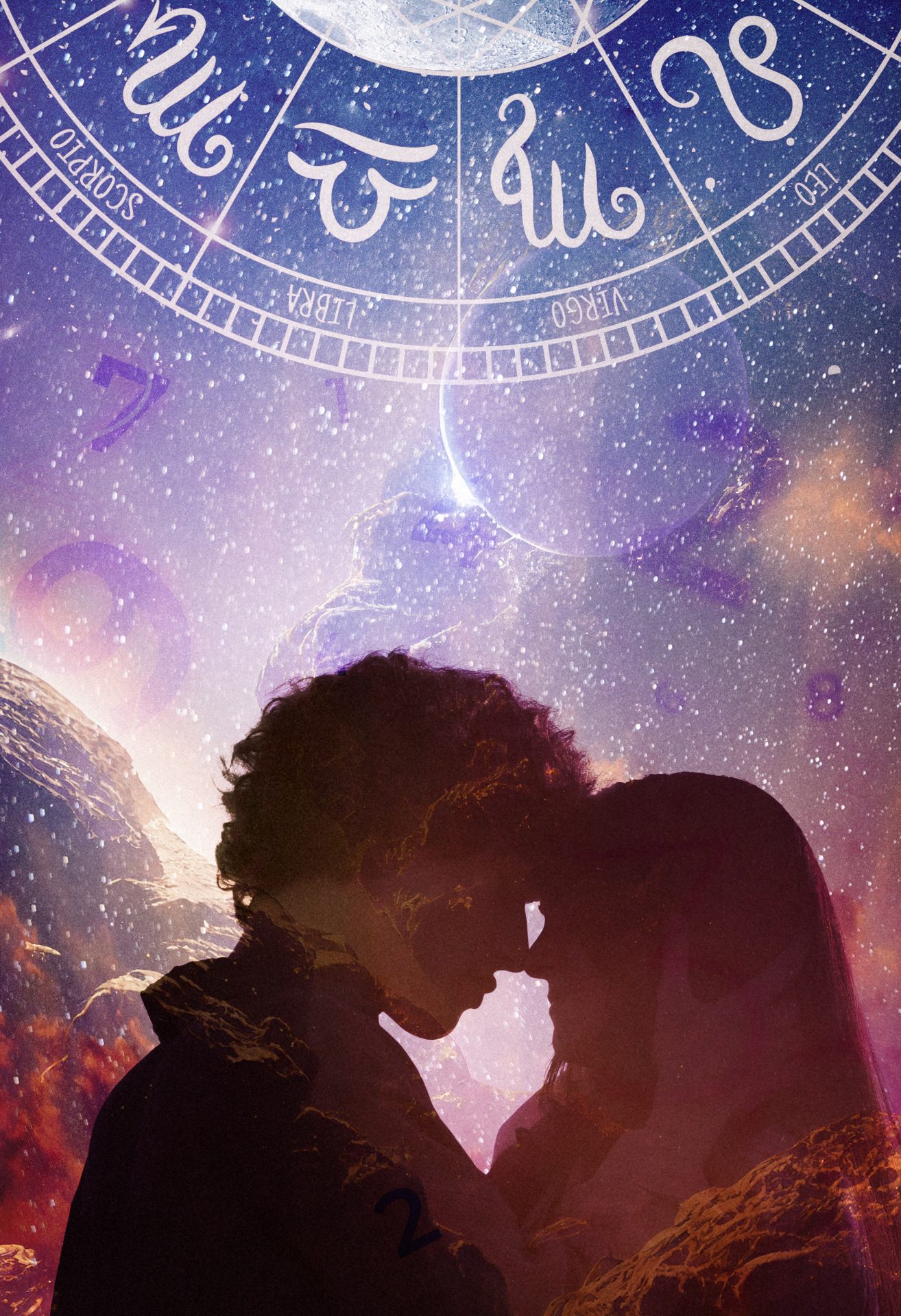
The celestial dance of the planets holds profound implications for human relationships, particularly through the lens of synastry—the astrological study of how the positions of celestial bodies at the time of one’s birth influence interactions amongst individuals. Among the myriad factors considered, the Sun occupies a pivotal role. Its luminosity not only signifies one’s core identity but also plays a crucial part in determining attraction dynamics. This is a captivating aspect of astrology that warrants exploration, especially when delving into the nuances of attraction and personal identity.
At its essence, the Sun represents the self—one’s essence, individuality, and life force. It governs our basic personality traits, how we perceive ourselves, and our innate needs. When examining synastry, it becomes essential to understand how the Sun interacts between two individuals, as these interactions set the stage for understanding attraction and identity in deep, meaningful ways. The quintessential question arises: how does the Sun inform the magnetism between two souls?
When contemplating synastry, one must first consider the elemental nature of the Sun. It is a fiery entity, characterized by warmth, vitality, and a compelling desire for expression. This vital quality can ignite attraction, serving as a beacon that draws one individual toward another. When the Sun of one person forms a harmonious aspect with the Sun of another—such as a trine or sextile—there is often an immediate sense of ease and comfort. This can create an environment where attraction flourishes organically, as both parties feel a profound recognition of one another’s identities.
However, the Sun’s influence is not uniformly benevolent; it can also generate friction. Challenging aspects like squares or oppositions often create scenarios where two individuals may feel a strong attraction coupled with tension. This dichotomy can result in a tumultuous relationship that is fraught with passionate exchanges, as each person’s sense of self can either clash or collide. Yet, paradoxically, it is this tension that can facilitate growth and evolution, compelling individuals to confront aspects of their identities that may remain unexamined. The Sun can thus serve as both the catalyst for connection and the crucible of transformation.
Moreover, the Sun’s zodiac sign further nuances these dynamics. For instance, a Leo Sun is naturally inclined towards flamboyance and self-expression, seeking admiration from partners. In contrast, a Pisces Sun may be more introspective, prioritizing emotional depth and connection. When these two energies intersect, understanding the variances in expression becomes paramount. Herein lies the opportunity for mutual growth—Leo can learn to inhabit vulnerability while Pisces can embrace assertiveness in their identity.
In addition to the aspects between the Suns, the houses in which these celestial bodies reside in each individual’s chart play a crucial role in defining the relational landscape. The house placement of the Sun signifies where one feels most at home in their identity and life pursuits. For example, if one partner’s Sun falls in the seventh house of relationships while the other’s Sun resides in the eleventh house of friendships and community, this can lead to a relationship grounded in open communication and social engagement. The interplay of house energies can illuminate avenues of attraction that may otherwise remain obscured.
The Sun is not merely a singular influence; its relationship with other planets further enriches the narrative of attraction and identity in synastry. Transiting aspects, particularly during significant planetary movements such as eclipses or conjunctions, can catalyze revelations about the self and one’s relationships. When the transiting Sun forms a favorable aspect to a natal Sun, there can be a surge of confidence and clarity that benefits both personal pursuits and partnership dynamics. Conversely, adverse interactions may present challenges, nudging individuals to reassess the foundations of their attraction and identity within the relationship.
In the broader scope of synastry, it becomes evident that the Sun’s influence is but one thread in the complex tapestry of relational dynamics. Elements such as the Moon, ascending node, and Venus also play integral roles, bringing emotional depth, spiritual inclination, and relational values into the equation. Each planetary interaction is a unique expression of the intricate web of attraction and identity, creating a multidimensional understanding of how partnerships function.
Ultimately, the Sun’s impact on attraction and identity in synastry serves as a powerful reminder of our interconnectedness and the celestial influences that weave through our lives. As individuals traverse the journey of self-discovery and relational exploration, the lessons derived from examining the Sun’s role can illuminate pathways toward deeper understanding, fostering relationships enriched by authenticity and mutual respect.
In conclusion, the exploration of the Sun within synastry presents an evocative dialogue between identity and attraction, merging the individual with the universal. The reverberations of the Sun’s energy not only highlight the nuances of personal interactions but also beckon us to reflect on our true selves. Understanding the intricate tapestry woven by the Sun in our astrological charts can furnish a deeper perspective on our relationships, revealing the profound ways in which attraction is intertwined with the quest for authentic identity.