In a world characterized by rapid change and fleeting moments, the notion of longevity captivates our imagination. As we ponder the future, we often predict advancements in technology and medicine that could extend our own lifespans. Yet, amidst these projections lies a fascinating reality grounded in the natural world: certain animals possess an extraordinary ability to endure for centuries, if not millennia. This exploration into the longevity of various species provides a remarkable glimpse into nature’s resilience and complexity.
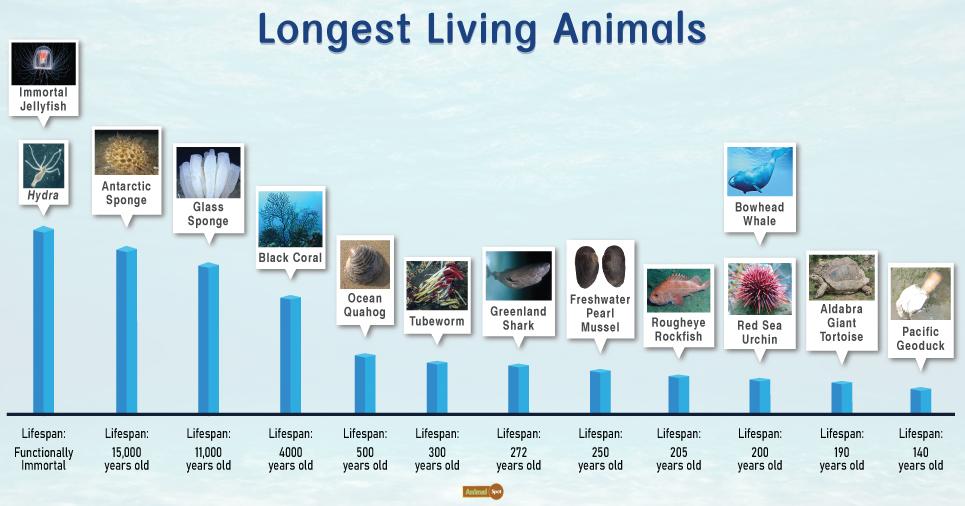
When we discuss longevity in the animal kingdom, whales frequently emerge as subjects of interest. The bowhead whale (Balaena mysticetus) is often heralded as one of the longest-living mammals. Research indicates that these majestic creatures can live over 200 years, with some estimates suggesting they may even reach ages of more than 211 years. What aids their longevity? Factors such as their slow reproductive rates and the cold, nutrient-rich waters they inhabit play a significant role in their life expectancy.
Equally intriguing is the ocean’s enigmatic and seemingly immortal jellyfish, Turritopsis dohrnii. Often dubbed the “immortal jellyfish,” this small creature possesses a unique capability to revert to its juvenile polyp stage after maturing. This biological quirk means that, theoretically, it could undergo this transformation indefinitely, allowing it to dodge the inevitability of death through natural means. While this jellyfish can still fall prey to disease or predation, its potential for biological renewal has captivated scientists and sparked discussions about the nature of immortality.
Turning our gaze to terrestrial realms, the tortoise provides a different narrative of longevity. The Galápagos tortoise, notable for its large size and impressive lifespan, can live upwards of 177 years. These remarkable reptiles have chosen a sedentary lifestyle, which, coupled with their herbivorous diet and protective hard shells, contributes to their longevity. Their slow metabolism and gradual growth rates further underscore their status as icons of endurance.
Among the avian species, the albatross stands out as a champion of longevity. Specifically, the wandering albatross (Diomedea exulans) has an impressive average lifespan of 50 years, with some individuals documented to have reached 80 years. This exceptional longevity can be attributed to their vast migratory patterns, which are intricately linked to the availability of food and environmental conditions. By mastering the art of soaring over long distances, these birds conserve energy and evade predators, thus enhancing their chances of a long life.
Meanwhile, in the realm of plants, the bristlecone pine (Pinus longaeva) has astounded researchers with its age-defying qualities. Some specimens have been carbon-dated to be over 5,000 years old. Their secret to survival includes a combination of its rugged growth in harsh, high-altitude climates and a slow growth rate that protects them from rapid decay. Not only do these trees challenge our understanding of longevity, but they also serve as living chronometers that witness the vicissitudes of climate and time, embodying nature’s enduring legacy.
The ocean, a treasure trove of mysteries, reveals yet another contender in the longevity stakes: the ocean quahog clam (Arctica islandica). Known for its striking resilience, this bivalve can live for more than 500 years. Research on this clam has unveiled that its unique protein structures and slow metabolic rates contribute significantly to its remarkable life span. Their ability to withstand various environmental stressors only adds to their enigmatic allure.
Additionally, the Greenland shark (Somniosus microcephalus) deserves mention as a notable contender. Recent studies estimate that these sharks could live for over 400 years, making them the longest-living vertebrates known to science. Their slow growth and late sexual maturity lead to a life cycle that stretches across centuries of Arctic waters, where they evade the pressures of predation and environmental upheaval.
As we examine the various creatures that dominate the narrative of longevity, a few common themes emerge: slow growth rates, protective adaptations, and the ability to withstand environmental challenges. The diversely structured ecosystems in which these animals thrive play an indispensable role in prolonging life. Understanding the intricacies of how these animals evade the clutches of death offers invaluable insights into resilience—both biological and ecological.
In an age where human life expectancy is on the rise, largely due to advancements in healthcare and technology, contemplating the lives of these enduring creatures invites introspection about our understanding of life and decay. Their presence implores us to consider what constitutes a successful and enduring life. As we forge ahead, embracing new technologies, it is essential to reflect on the lessons these extraordinary beings impart about living in harmony with our environments and adapting to life’s inevitable changes.
The narrative of animal longevity challenges us not only to marvel at nature’s wonders but also to appreciate the complexities of life itself. As we anticipate what the future holds for humanity, we should recognize the profound wisdom encapsulated in the existence of nature’s most enduring creatures—a testament to vitality, adaptability, and the interconnectedness of all life on our planet.