The quest for longevity transcends the realms of human experience, extending its fascinating reach into the animal kingdom. Each species has evolved unique adaptations, enabling them to stave off the ravages of time in extraordinary ways. As we delve into the intriguing world of nature’s longest-living creatures, we discover not just impressive statistics, but a deeper meaning surrounding their existence. These remarkable beings challenge our perception of life and resilience, offering a glimpse into the intricacies of survival on planet Earth.
Among the plethora of organisms inhabiting our world, a select few have grasped the elusive concept of eternal life—at least compared to the rest of the animal kingdom. Herein lies an exploration of some of Earth’s oldest inhabitants, revealing their astonishing lifespans and the ecological roles they fulfill.
1. The Immortal Jellyfish (Turritopsis dohrnii)
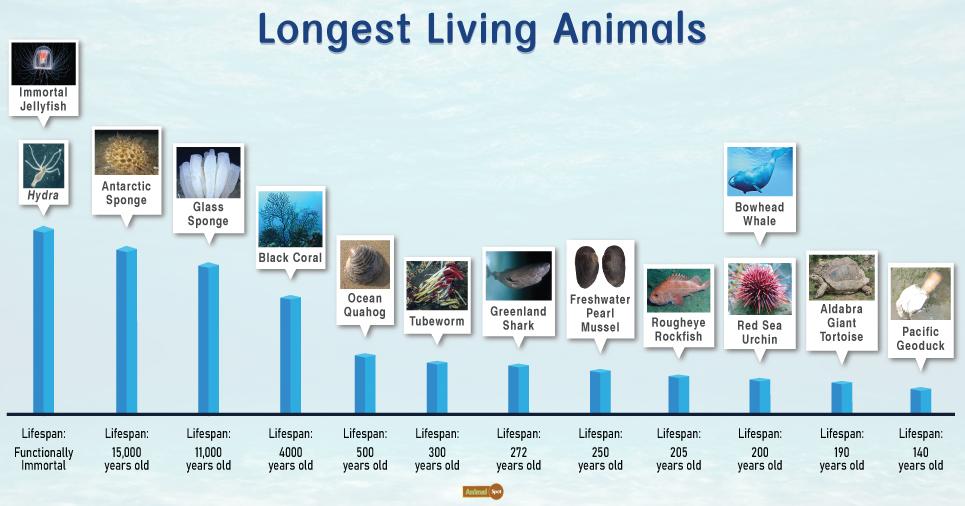
Perhaps the most enigmatic of all, the immortal jellyfish possesses a biological tapestry that defies the conventional aging process. Native to the Mediterranean Sea, Turritopsis dohrnii can revert to its juvenile polyp stage after reaching maturity, essentially allowing it to sidestep death. This extraordinary ability has earned it the moniker of “biological immortal.” Although various external threats can still culminate in its demise, the jellyfish’s remarkable capacity for cellular reprogramming presents an alluring paradox to the concept of mortality.
2. The Greenland Shark (Somniosus microcephalus)
In the cold depths of the Arctic and North Atlantic Oceans, the Greenland shark thrives in chilling waters, navigating through the annals of time. Recent studies have suggested that these remarkable sharks can live for an astonishingly long time—up to 400 years. Their slow growth rate and largely sedentary lifestyle contribute to their longevity, making them one of the longest-living vertebrates known to science. This elusive predator not only plays a crucial role in its marine ecosystem but also prompts scientific inquiry into the implications of aging and environmental adaptation.
3. The Bowhead Whale (Balaena mysticetus)
Journeying through frigid Arctic waters, the bowhead whale is another participant in the lengthy contest for longevity. With lifespans that can exceed 200 years, these gentle giants bear witness to centuries of Earth’s changes. Equipped with robust baleen plates, they filter-feed on small organisms, sustaining themselves on the rich marine resources. Moreover, bowhead whales have been observed with harpoons embedded in their blubber, indicating that some individuals have survived for over a century after being hunted. The resilience of this species not only highlights the adaptability of marine mammals, but also evokes profound ecological considerations regarding conservation and human impact.
4. The Red Sea Urchin (Strongylocentrotus franciscanus)
On the stunning seashores of the Pacific Ocean, the red sea urchin emerges as a formidable contender in the sphere of longevity. With lifespans that can stretch over 200 years, these spiny invertebrates exhibit a unique combination of hardiness and ecological significance. Residing in intertidal zones, they contribute to the balance of marine ecosystems by grazing on algae and maintaining the health of kelp forests. Their longevity provides critical insights into the effects of climate change on marine species and the necessity for ecological preservation.
5. The Aldabra Giant Tortoise (Aldabrachelys gigantea)
Ambling on land and exuding an aura of ancient wisdom, the Aldabra giant tortoise stands as a testament to longevity. Known to live for over 150 years, these tortoises are slow to mature and spend most of their lives grazing on the diverse flora of their tropical island habitats. Their sedentary lifestyle, combined with a minimal number of predators, allows them to thrive for extended periods. These tortoises also play a vital role in their ecosystems by aiding in seed dispersal, thereby influencing the vegetation patterns of their habitat.
6. The Macaw (Ara macao)
In stark contrast to the aquatic giants, the macaw showcases a different flavor of longevity. Capable of living for 50 to 80 years in the wild, these vibrant birds display not only endurance but also intelligence. Renowned for their social structures and vocal abilities, macaws play essential roles in the biodiversity of their native rainforests. Their longevity serves as a reminder of the complex relationships that exist within ecosystems, where every creature, no matter how small or seemingly common, contributes significantly to the overall tapestry of life.
As we navigate through these astounding examples of longevity in the natural world, it becomes evident that extreme lifespans are not merely a product of time spent, but rather a reflection of resilience and adaptation. These creatures, each in their unique manner, exemplify the intricate interplay between survival and ecological balance. The stories of Earth’s oldest inhabitants serve as poignant reminders of the fragility and wonder of life on our planet.
Ultimately, the durability of these species unveils profound implications for our understanding of aging, conservation, and the intricate web of life. As we continue to explore the mysteries of existence, let us glean wisdom from these animal architects, respecting their roles within our ecosystems and acknowledging the lessons they impart about the profound depth of life itself.