The Toyota 4Runner has long been a mainstay in the realm of sport utility vehicles (SUVs), revered for its off-road prowess and versatile design. As we look toward the future, the expectations surrounding this rugged vehicle continue to evolve. With an ever-increasing appetite for adventure and recreational pursuits, potential buyers are keenly interested in understanding the 2023 Toyota 4Runner’s towing capacity. What can this well-rounded SUV truly handle?
Understanding towing capacity is not merely a matter of knowing numbers; it encompasses a range of factors including weight ratings, engine capabilities, and structural integrity. The allure of weekend camping trips, boat excursions, or towing a utility trailer relies heavily on a vehicle’s aptitude to accommodate such demands. Thus, let’s delve into the towing capacity of the 2023 Toyota 4Runner and explore what it can genuinely manage.
At the heart of the 2023 Toyota 4Runner lies an impressive 4.0-liter V6 engine. This powerhouse generates a formidable 270 horsepower and 278 lb-ft of torque, establishing the foundation for its towing capabilities. Coupling this robust engine with a five-speed automatic transmission contributes to a seamless power delivery experience. When considering towing, the engine’s torque is pivotal; it provides the necessary force to pull hefty loads without compromising performance.
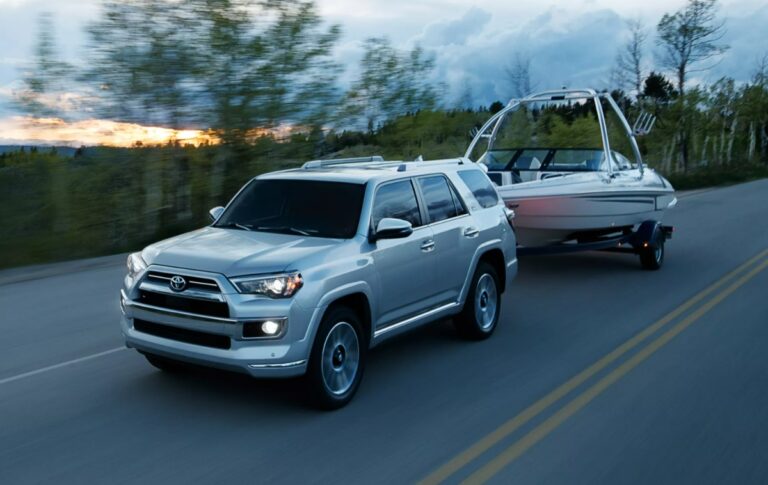
The towing capacity of the 2023 Toyota 4Runner stands at an impressive 5,000 pounds when adequately equipped. This figure positions the 4Runner competitively within its segment, allowing it to haul a variety of trailers, boats, and recreational vehicles. Remember that this capacity is contingent upon certain configurations—specifically, the vehicle must come equipped with the requisite towing package. This package typically includes features such as a class IV hitch receiver and a wiring harness, ensuring everything from connecting to controlling the trailer’s lights works harmoniously.
For those interested in what the 4Runner can tow, consider a few examples. A small boat, compact camper, or utility trailer full of gear easily falls within this range. Specifically, a diverse selection of lightweight travel trailers is accessible for adventurers who revel in life on the road. Furthermore, enthusiasts who prefer outdoor activities may find this towing capacity adequate for hauling all-terrain vehicles (ATVs) or personal watercraft.
In addition to the numerical towing capacity, one must not overlook the significance of the 4Runner’s structural design. Built on Toyota’s robust body-on-frame architecture, this SUV is specifically engineered to endure the stresses associated with towing. This construction methodology enhances durability and provides added stability when hauling heavy loads. For those venturing off the beaten path, the 4Runner’s impressive ground clearance further complements its capability, allowing it to negotiate uneven terrains with ease.
Equally vital to towing is the braking system, which warrants attention. The 2023 Toyota 4Runner features a reliable braking system equipped with ventilated disc brakes in both the front and rear. The combination of strong brakes and trailer sway control—an assistive feature—ensures that both the vehicle and the trailer remain under control, even in slippery or challenging driving conditions. These features enhance the overall safety of any towing endeavor, providing peace of mind on the road.
Technology plays a significant role in modern towing, and the 4Runner does not disappoint in this department. Integrated systems, such as the Toyota Safety Sense suite, supplement the towing experience with features like adaptive cruise control and pre-collision systems. These technological advancements, combined with the physical capabilities of the vehicle, create a more confident and enjoyable towing experience.
A common inquiry regarding towing includes not just what can be towed but how the vehicle fares when bearing such weights. Consumer expectations have spurred manufacturers to design vehicles that do not suffer from diminished performance under load. Fortunately, the 4Runner’s robust construction and powerful engine aim to deliver performance consistency across a variety of conditions, instilling confidence when handling heavier payloads.
It’s essential to understand the weight of the vehicles and trailers being considered for towing. This involves accounting for the Gross Vehicle Weight Rating (GVWR) and the Load Capacity, which indicates how much additional weight the 4Runner can handle. Precise calculations are paramount, as they ensure compliance with safety standards and preserve the integrity of the vehicle and its components.
One must not overlook the critical aspect of driver proficiency and responsibility when towing. Familiarity with vehicle dynamics and the nuances of maneuvering while towing are paramount. Drivers should heed guidelines on vehicle maintenance, including regular checks on tire pressure, brakes, and fluid levels—care which preserves the 4Runner’s capabilities over the long haul.
As consumer lifestyles evolve toward increased adventure and exploration, the expectations surrounding the Toyota 4Runner’s towing capacity illustrate a growing demand for robust, dependable vehicles. The combination of advanced engineering, safety features, and towing capacity positions the 2023 Toyota 4Runner as an appealing option for those who desire both rugged outdoor experiences and practical towing solutions.
In conclusion, the 2023 Toyota 4Runner emerges not just as an SUV but as a capable partner for those adventurous souls looking to haul gear and create memories. With an impressive towing capacity and a structural design that prioritizes safety and performance, the 4Runner stands poised as a future-proof vehicle, ready to meet the diverse needs of its drivers.