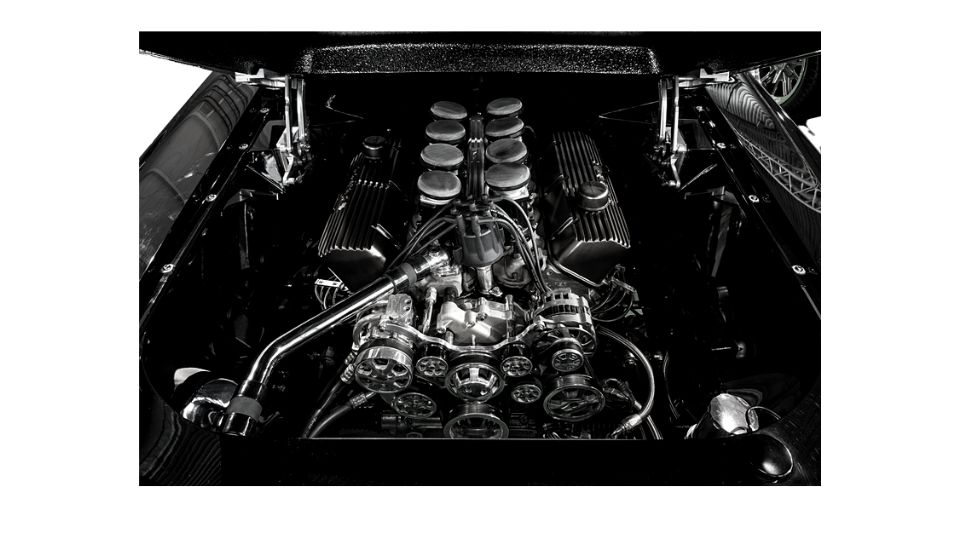
The Ford 460 engine, a venerable titan among the ranks of big block V8s, has carved out a niche for itself in the hearts of automotive enthusiasts and DIY mechanics alike. Its robust design offers ample power for a variety of applications, from heavy-duty trucks to performance street machines. Yet, within this mechanical marvel lies a crucial component that often garners less attention than it deserves—the firing order. Understanding the Ford 460 firing order is not just an exercise in technical knowledge; it is a gateway to unlocking the engine’s full potential. It’s about ensuring optimal engine performance and longevity, no matter the gasoline-fueled adventure that lies ahead. Herein lies a comprehensive guide designed specifically for DIY mechanics seeking to demystify the intricacies of this legendary engine.
At its core, the firing order of an engine dictates the sequence in which the cylinders receive a spark and, consequently, ignite the fuel mixture. For the Ford 460 engine, the firing order is 1-5-4-2-6-3-7-8. This sequence plays a pivotal role in achieving smooth operation and efficiency, minimizing vibrations, and ensuring adequate power delivery. But why, you may wonder, is this order crucial beyond merely following a set of numbers? Each cylinder’s timing impacts the overall combustion process, directly influencing torque and horsepower output.
Before delving deeper, let’s explore how to locate the cylinders on the Ford 460. The cylinder numbering begins at the front of the engine and works its way back. On the driver’s side, the cylinders are numbered 1, 3, 5, 7, while the passenger’s side hosts cylinders 2, 4, 6, 8. Recognizing this arrangement is essential when replacing spark plugs, conducting maintenance, or troubleshooting ignition issues.
Moreover, the firing order not only guides ignition timing but also significantly affects the engine’s thermal dynamics. A well-timed firing sequence facilitates optimal heat distribution, thereby preventing localized overheating of any one cylinder. This attribute is crucial, especially in high-performance scenarios where the engine is subjected to stress. Overheating can lead to catastrophic failures such as warped heads or cracked blocks. Therefore, maintaining the correct firing order is paramount for DIY mechanics who aim to keep their Ford 460 running smoothly.
To further illustrate the importance of the firing order, consider the following scenario: you’ve just completed an engine rebuild or a minor tune-up. Perhaps you’ve detuned your vehicle or changed the ignition system. It’s imperative to refer back to the firing order during this process to ensure all components align correctly. Misfiring can not only hamper performance but may also lead to inefficient fuel consumption, a troubling outcome for anyone who values a well-oiled machine.
Another aspect to consider is the compatibility of the ignition system with the firing order. Older models may utilize traditional points and condensers, while many modern systems employ electronic ignitions. Each system has its nuances, and adjustments may be necessary to accommodate the specific firing sequence. Additionally, ignition timing further alters this dynamic, acting in concert with the firing order to produce an optimal combustion event.
Now, let us discuss practical methods for verifying and diagnosing firing order issues. Numerous tools are at the disposal of the DIY mechanic, chief among them being an ignition timing light. This device allows for real-time observation of the ignition system’s performance relative to the firing order. By observing the timing map against manufacturer specifications, one can swiftly determine if adjustments are warranted. If misfires persist, a compression test can also elucidate issues such as valve seat problems or piston ring wear that can arise from incorrect firing sequences.
Visualizing the firing order through a structured diagram can also enhance understanding. A schematic that outlines cylinder arrangement and firing sequence provides clarity, making it easier for mechanics to follow along during repairs or assembly. Creating such a reference and placing it close to your work area can serve as a handy reminder throughout any project.
In the realm of performance modifications, understanding the firing order brings additional layers of complexity and opportunity. Alterations to the exhaust or intake systems, camshaft changes, or even updated ignition setups can necessitate a reevaluation of how the firing order affects overall engine performance. Some enthusiasts experiment with aftermarket parts specifically designed to enhance firing sequences, leading to increased efficiency and power. However, all alterations should be approached with caution and thorough research to avoid unintended consequences.
Lastly, in conclusion, the Ford 460 firing order is not merely a sequence of numbers; it represents the lifeblood of the engine—an essential aspect of its operational integrity. As DIY mechanics delve into the inner workings of this powerhouse, a robust understanding of the firing order will illuminate the path towards maximizing performance and maintaining reliability. So, whether you’re performing routine maintenance, tackling a full engine teardown, or simply engaged in a weekend project, remember that this knowledge empowers you to preserve the legacy of the Ford 460 with diligence and pride.