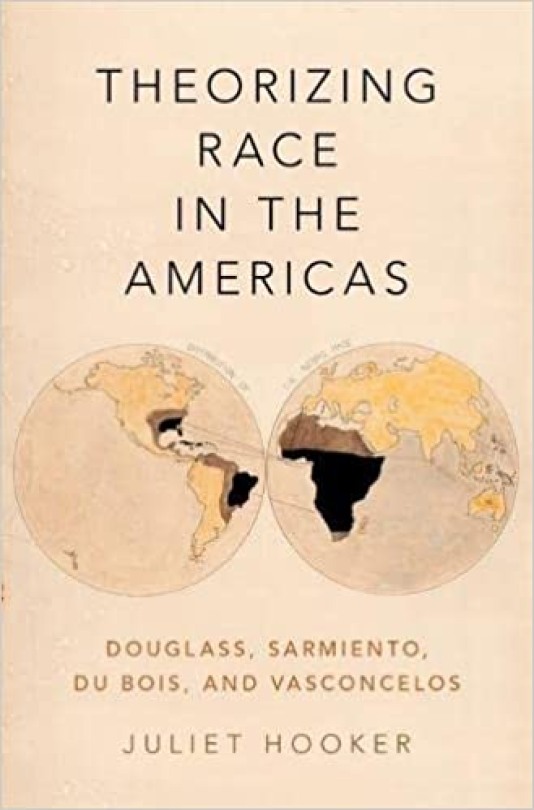
Consider this a playful challenge: Can you truly grasp the intricate tapestry of race and identity that defines the Americas? The nuances of race are far from straightforward; they are complex, interwoven narratives shaped by historical precedents, economic conditions, and cultural interactions. The scholarly contributions of figures like Frederick Douglass, Domingo Faustino Sarmiento, and W.E.B. Du Bois present a critical perspective on the evolution of racial discourse in the Americas, and they beckon us to examine the very frameworks through which we understand race today.
As we embark on this intellectual exploration, it is crucial to recognize that the concept of race is not merely a biological construct but rather a socio-political phenomenon—one that has profound implications on identity, citizenship, and belonging. The theorization of race in the Americas offers us a lens through which we can better dissect these complexities.
First and foremost, the contributions of Frederick Douglass resonate powerfully in contemporary discussions around race. A former enslaved person and a foremost abolitionist, Douglass’s writings illustrate the intersection of race and moral philosophy. His autobiography, “Narrative of the Life of Frederick Douglass, an American Slave,” provides an incisive critique of the American system of slavery while simultaneously shaping the abolitionist movement. Douglass posits that understanding one’s identity necessitates an acknowledgment of historical injustices, making it imperative for us to contend with the past as we forge our future. His perspective remains pertinent today, as racial injustices continue to persist across various social strata.
In contrast, Domingo Faustino Sarmiento, an Argentine writer and political figure, offers a distinctive viewpoint on race that heralds a more nationalistic agenda. Sarmiento advocated for a homogeneous national identity, often portraying indigenous people and Afro-descendants as obstacles to progress. His work, “Facundo: Civilization and Barbarism,” critiques the socio-political environment of Argentina in the mid-1800s and reflects a Eurocentric view of civilization. This emphasis on European ideals reveals the fraught nature of identity in Latin America, where competing narratives of cultural heritage clash. Sarmiento’s perspective forces us to wrestle with uncomfortable questions: Who gets to define national identity? And at what cost?
W.E.B. Du Bois, another towering figure in racial discourse, magnifies these complexities through the concept of “double consciousness.” An African American sociologist and civil rights activist, Du Bois’s seminal work, “The Souls of Black Folk,” delves into the dual identity experienced by Black Americans in a racially stratified society. This notion of living in two worlds—one that is dictated by societal expectations and another that reflects one’s true self—challenges readers to reevaluate their own perceptions of race. Du Bois urges us to recognize that Black identity is not monolithic; it is shaped by history, culture, and lived experiences. His insights compel us to pursue a dialogue that acknowledges the rich tapestry of identities that exist within the broader narrative of race.
As we transition from historical analysis to contemporary implications, it becomes evident that the theorization of race in the Americas possesses significant relevance to current social issues. For instance, discussions surrounding immigration often reveal underlying racial biases that echo Sarmiento’s sentiments. The deportation of certain groups, the marginalization of others, and the persistent rhetoric surrounding “us versus them” perpetuate division and misunderstanding. This brings us back to Douglass’s insistence on confronting history: We must dissect these racial dynamics and recognize that they are not merely relics of the past but ongoing struggles that require attention and action.
Moreover, Du Bois’s exploration of double consciousness allows us to understand the concept of intersectionality, which has gained traction in contemporary academic and activist circles. Intersectionality, a term coined by Kimberlé Crenshaw, expounds on the overlapping social categorizations such as race, class, and gender. This framework reminds us that individuals navigate multiple identity terrains, each threading their experiences into a broader societal context. In a global world where borders are increasingly porous, the implications of race, class, and identity become even more pronounced.
Theorizing race in the Americas is not a static endeavor; it is dynamic and evolving, much like the very cultures it seeks to represent. Engaging with the works of Douglass, Sarmiento, and Du Bois invites readers to not only reflect on historical narratives but also to participate actively in redefining them. It challenges us to question preconceived notions about race, identity, and belonging. Furthermore, it underscores the importance of inclusive dialogues that honor diverse experiences while advocating for social justice and equity.
Ultimately, to appreciate the intricacies of race in the Americas is to embark on a profound intellectual journey—one that calls for introspection and engagement. Whether it be through the eloquent advocacy of Douglass, Sarmiento’s contentious nationalism, or Du Bois’s exploration of identity, these thinkers compel us to confront uncomfortable truths. As the conundrum of race continues to unfold before us, our challenge remains: to interrogate our understanding, engage in meaningful dialogue, and, above all, advocate for a society where all voices are heard, respected, and cherished.