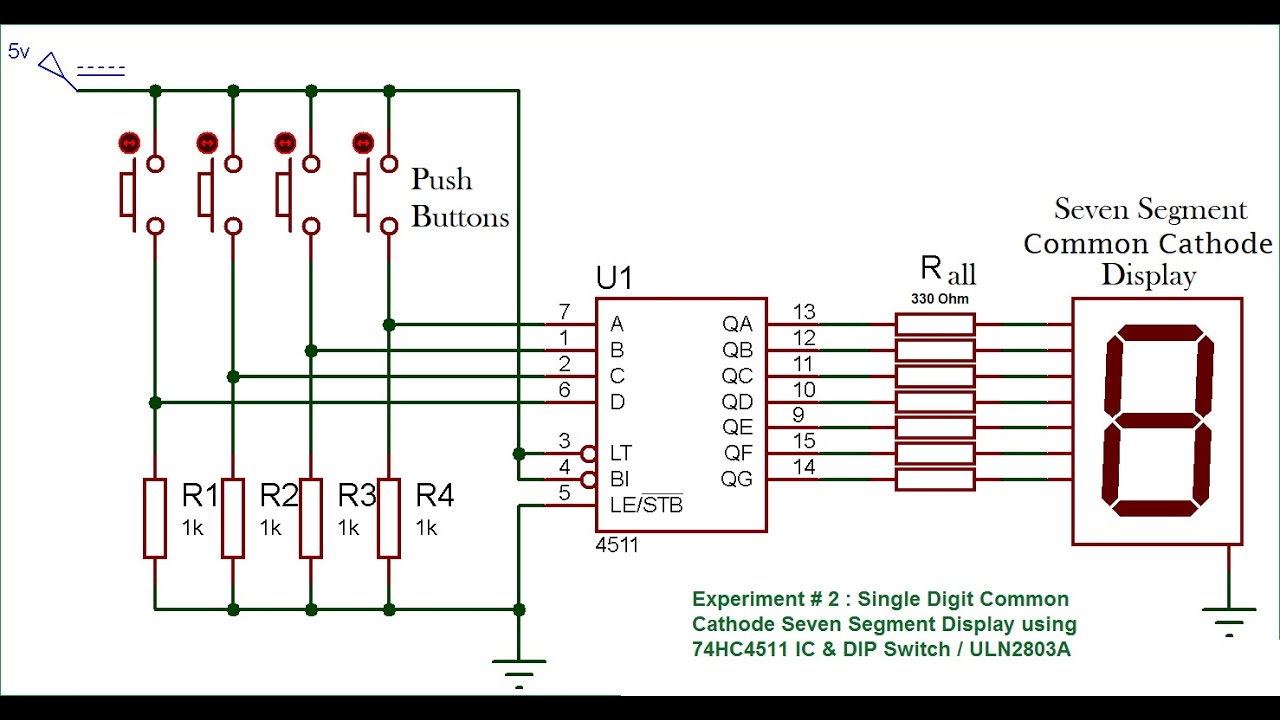
In the realm of electronics, where simplicity often reigns supreme, the 7-segment display stands out as a ubiquitous component, desirable for its straightforward functionality and visual clarity. However, beneath this veneer of simplicity lies a more intricate world of design considerations, operation, and application. A common cathode 7-segment display, in particular, serves as an excellent case study to help demystify these components and encourage a deeper understanding of electronic display technologies.
To appreciate the significance of 7-segment displays, it is prudent to revisit their architecture. These displays consist of seven individual LED segments arranged in a figure-eight configuration, with an optional additional segment for the decimal point. Each segment can be activated independently to form various numerals and a limited set of characters. The unique design and configuration allow these displays to exhibit numerical values from 0 to 9, along with alphabetic representations such as A, b, C, d, E, and F when needed.
A pivotal aspect that distinguishes the common cathode display from its common anode counterpart lies in the internal circuitry and the logic of segment activation. In a common cathode design, all the cathodes of the individual LEDs are linked together to ground. This means that to illuminate a particular segment, positive voltage must be applied to its corresponding anode. This operational paradigm simplifies the control logic and enhances compatibility in many applications, particularly in digital circuits interfacing with microcontrollers.
The allure of common cathode displays goes beyond just their electronic simplicity. The manner in which they operate can profoundly influence circuit design and performance. For example, if one were to control a 7-segment display using a microcontroller with GPIO pins, programming the relevant pins to high voltage levels would result in the bright illumination of the designated segments. Thus, understanding this connection forms the crux of successful integration into any electronic project.
Let us delve into the practical utility of common cathode displays. These integral components are ubiquitous in devices such as digital clocks, calculators, and various measurement instruments. The reason for their widespread use stems from their simplicity in design, ease of interfacing with logic circuits, and robustness in the face of voltage fluctuations—a common challenge in electronic components. When designing equipment that needs to convey numerical data succinctly, nothing quite rivals the clarity of a 7-segment display.
For enthusiasts and professionals alike, working with 7-segment displays can also be an illuminating experience. The interfacing methods with microcontrollers, such as Arduino, Raspberry Pi, or traditional ICs, often involve utilizing a resistor with each segment to regulate current and prevent overload. A complete understanding of the electrical characteristics—voltage and current ratings—is crucial to ensure that the display functions within its operational envelope, thereby prolonging lifespan and enhancing performance.
When it comes to the practical aspects of designing a circuit that employs a 7-segment display, various techniques can elevate the design. For instance, multiplexing presents an elegant solution for controlling multiple displays while using fewer GPIO pins. This method involves lighting up one digit at a time in rapid succession, giving the impression of simultaneous illumination. This deft balancing act between efficiency and visibility is where many innovative circuit designers shine, making good use of dynamic time-sharing in their projects.
Moreover, an understanding of the peripheral electronics involved is equally imperative. Drivers and decoders are commonly integrated into designs to facilitate communication between the microcontroller and the display. Dedicated ICs such as the 4511 BCD to 7-segment latch/decoder/driver enable the seamless integration of a common cathode display into complex circuits while ensuring that your project remains compact and manageable. These auxiliary components significantly reduce the complexity of the design, allowing engineers to focus on functionality rather than redundancies.
The aesthetic aspect should not be overlooked, as well. Varieties of colors and brightness levels in LED segments introduce aesthetic versatility, enabling designers to align the display characteristics with the overall design ethos of their projects. For instance, utilizing a bright red display may evoke a different sentiment than a cool blue one. This attention to visual detail becomes paramount in user-centric designs where the interface’s usability is intimately tied to user experience.
However, despite their strengths, common cathode displays are not without limitations. The relatively low character representation can prove troublesome for applications requiring extensive alphanumeric output. Additionally, for employment in high-speed applications, the response time, dictated by the display’s inherent electrical characteristics, can limit its utility. Thus, engineers must judiciously assess these factors while selecting the appropriate display for their project.
In conclusion, the 7-segment common cathode display embodies a fascinating intersection of design simplicity and operational complexity. Through an intimate understanding of its components, functionalities, and potential challenges, practitioners can leverage its strengths while mitigating weaknesses. Whether for educational purposes or professional endeavors, mastering the intricacies of these displays can undoubtedly enrich one’s repertoire in electronic design and development. Embracing these nuanced perspectives fosters a deeper appreciation for the elegant dance of logic and light that defines modern electronic interfaces.