In the current digital era, the debate between gaming monitors and televisions has transcended beyond mere specifications and has morphed into a broader examination of immersion, performance, and user experience. As avid gamers seek the ultimate platform for their beloved pastime, questions emerge: Can a television truly substitute for a gaming monitor? Do the nuances of pixel density, refresh rates, and response times hold the key to unlocking the pinnacle of gaming gratification? This exploration aims to dissect the salient differences between monitors and TVs for gaming, illuminating the path toward making an informed decision that aligns with your gaming aspirations.
At the outset, one must acknowledge the fundamental distinctions between the two devices. Gaming monitors are engineered for a singular purpose: to deliver optimum gaming performance. Their attributes—often highlighted by ultra-fast refresh rates, minimal input lag, and superior response times—are tailored to cater to the most demanding gamers. In contrast, televisions historically prioritize versatility, serving as multipurpose entertainment hubs designed to accommodate various media forms, including streaming movies, binge-watching series, and casual gaming.
When considering resolution, both televisions and monitors often boast varied options. The contemporary gamer is likely well-acquainted with 1080p and 4K resolutions. While 4K TVs may dominate the living room setup, gaming monitors frequently offer a bevy of resolutions including 1440p and even ultrawide formats that expand the field of vision. The latter is particularly alluring for gamers who crave a more immersive environment, offering feature-rich experiences in games with sprawling landscapes. Monitors tend to engage this aspect with precise clarity, providing a level of detail that many TVs might struggle to replicate, especially in fast-paced scenarios where every millisecond counts.
Another critical consideration is the refresh rate, which pertains to how frequently an image is rendered on-screen per second. The average television typically operates within the 60 Hz range, though some premium models now boast refresh rates up to 120 Hz. Gaming monitors, however, often push the envelop, reaching refresh rates of 240 Hz or higher. This distinction is vital for competitive gameplay, where the advantage often resides in split-second reactions. A higher refresh rate translates to smoother gameplay, reducing motion blur and offering a more fluid visual experience that is paramount in first-person shooters and racing games.
One cannot overlook the relevance of input lag, an often underestimated yet imperative element in the gaming experience. Monitors boast nominal input lag, with some models registering less than 5 milliseconds, ensuring that your actions are almost instantaneous on-screen. Conversely, televisions can experience higher input lag, occasionally exceeding 30 milliseconds, especially in picture-enhancing modes meant for cinematic viewing. For gamers aiming to gain an edge in competitive settings, lower input lag can mean the difference between victory and defeat.
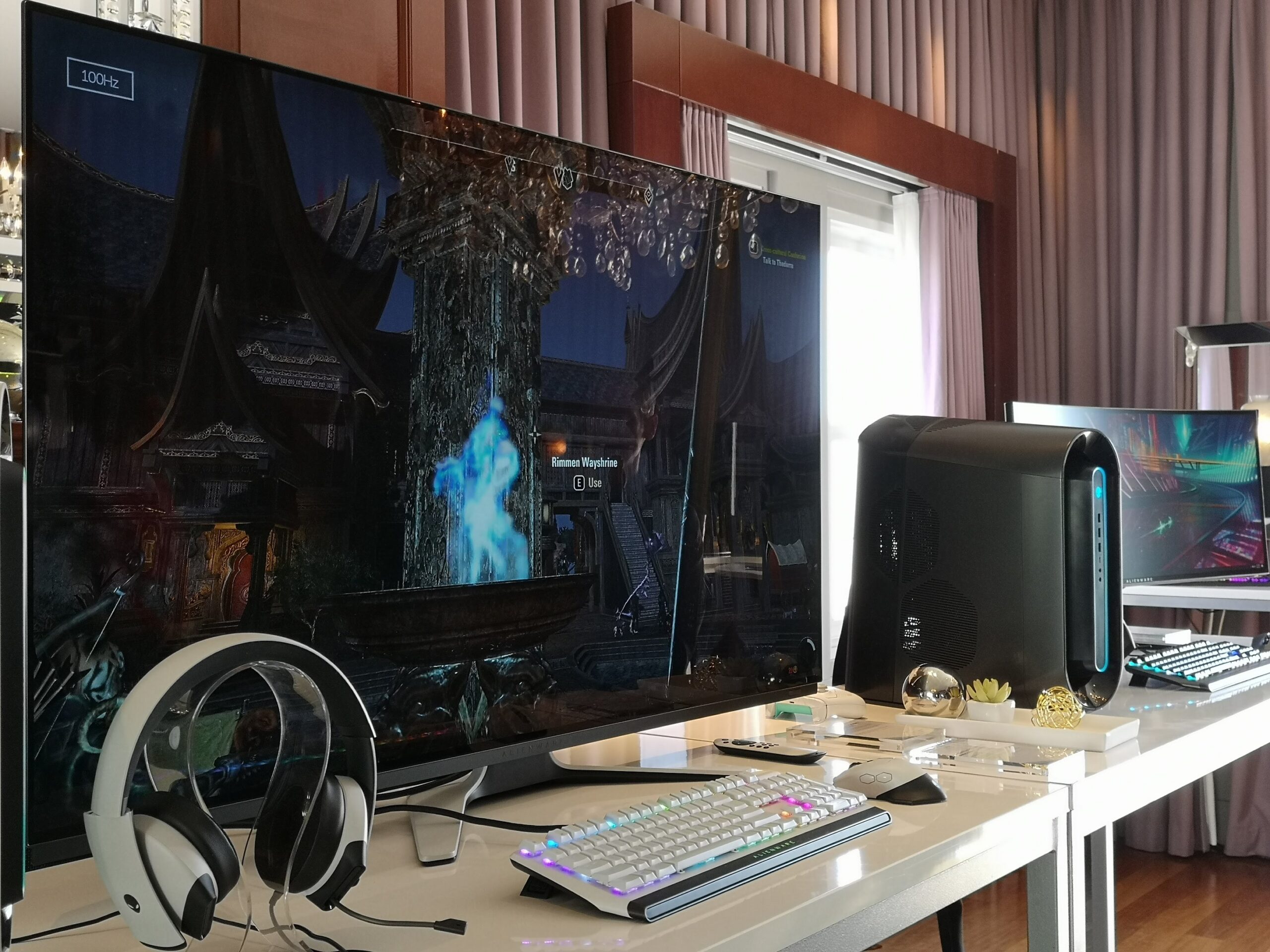
Moreover, the ergonomics of the devices merit attention. Typically, gaming monitors come equipped with adjustable stands—allowing for optimal viewing angles, tilt, height adjustments, and even pivot options. This adaptability enhances comfort during prolonged gaming sessions, whereas most TVs are relatively static. Although wall mounting options exist for televisions, those inclined to shift their setups frequently may find monitors more accommodating.
Connectivity options also play a significant role in the decision-making process. Many gaming monitors feature diverse inputs such as DisplayPort and HDMI, ensuring seamless compatibility with high-end graphics cards and gaming consoles. Televisions, on the other hand, while often equipped with HDMI ports, may lack support for the newest standards or advanced features like G-Sync and FreeSync, which mitigate screen tearing during intense gaming sessions. This can be a dealbreaker for discerning gamers seeking a finely-tuned setup.
Furthermore, the intended usage scenarios will greatly influence your choice. If the primary objective revolves around high-stakes gaming, a monitor is an undeniable frontrunner, boasting specifications tailored for seamless and immersive gameplay. Conversely, for households that double as media consumption spaces, a TV presents an appealing option. With larger screen sizes that can accommodate more viewers, it becomes ideal for communal gaming experiences or family movie nights.
In recent years, the convergence between televisions and monitors has grown increasingly pronounced. Many manufacturers have designed gaming-oriented TVs replete with gaming modes, features bolstered by HDMI 2.1 support, and even capabilities for variable refresh rates. These advancements beckon a consideration for hybrid solutions that cater to both gaming and general media consumption. Such options, however, often come with a heftier price tag, thus prompting serious reflection on whether the investment aligns with one’s primary gaming requirements.
In summation, both gaming monitors and televisions possess inherent advantages tailored to different gaming experiences. Monitors emerge as the preferable choice for avid gamers intent on achieving pinnacle performance, equipped with specifications and features that cater to immersive, competitive play. Alternatively, televisions provide a multifaceted solution that caters to a broader spectrum of entertainment needs. Ultimately, the crux of the decision hinges on individual preferences, play styles, and intended use cases. With this ascendant knowledge, gamers can confidently navigate the dichotomy of monitors and TVs, forging a path toward their optimal gaming sanctuary.