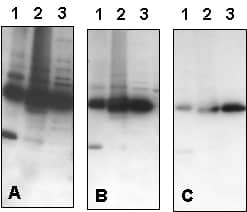
In the realm of molecular biology and biochemistry, the Western blot technique is a stalwart. This powerful method not only allows researchers to detect specific proteins in a complex mixture but also gives rise to a myriad of illustrations and figures that provide visual context to experimental findings. However, the efficacy of these figures is contingent upon their accompanying legends—captions that at once elucidate and document the significance of the presented data. The intricate dance between figures and legends warrants in-depth discussion, for it is through their synergy that researchers convey the essence of their discoveries.
Figures in scientific literature serve multiple purposes: they clarify complex data presentations, enhance reader comprehension, and foster a thorough understanding of the underlying biological narratives. A well-crafted figure can encapsulate an entire study’s value in just a glance. Nevertheless, the true enlightenment comes through the legends that explicate the visual data, offering context and interpretation critical to guiding the reader’s understanding.
When constructing Western blot figures, there are several key aspects to consider. Firstly, the clarity of the figure should be paramount. Each band on the blot must be distinctly visible; overexposed or poorly resolved bands can result in misleading conclusions. Scientists must be meticulous when selecting the exposure time and the development methods. Moreover, including appropriate controls and molecular weight markers reinforces the credibility of the results.
The inclusion of legends is equally critical. A legend should be comprehensive yet concise, empowering the viewer with sufficient detail to comprehend the figure without overwhelming them with extraneous information. An effective legend aught to answer the following questions: What is shown? What do the data signify? How were the experiments conducted? Additionally, if any experimental variants or conditions are illustrated, these should be noted clearly to mitigate potential confusion.
To exemplify the integral relationship between figures and legends in Western blot documentation, consider the legend for a typical Western blot figure. It should begin with a brief description of the blotting procedure, including information on the specific antibodies used and the target protein, along with the samples from which the data were derived. For instance, “Western blot analysis demonstrates the presence of β-Actin in lysates derived from HeLa and Jurkat cells, probed with anti-β-Actin antibody (1:1000, catalog #AB1234) following a standard electrophoresis protocol.” Such detailing enriches the reader’s comprehension while fortifying the figure’s scientific veracity.
Moreover, legends should address the significance of findings. They should not only summarize the visual data depicted but interpret its implications within the wider scientific discourse. For example, “Lysates from HeLa cells exhibited increased β-Actin expression compared to Jurkat cells, indicating a cell-type specific regulation of cytoskeletal components.” This interpretation positions the findings within the broader scope of existing research, inviting the reader into a deeper conversation about the implications of the results.
Another vital component in crafting effective figures and legends is adherence to ethical guidelines regarding data presentation. Scientific integrity must be upheld through the accurate representation of data. This encompasses avoiding misleading presentations such as the selective omission of bands or inappropriate manipulations that could distort the true message of the data. Transparency about experimental methods bolsters the reliability of one’s work and promotes replicability, an essential cornerstone in scientific inquiry.
Furthermore, standardization in figure preparation enhances accessibility. Employing consistent formatting across figures—such as uniform color schemes, similar axis scales, and coherent font styles—facilitates the reader’s ability to compare and contrast data sets within a study. A multitude of figures without a coherent theme can lead to cognitive dissonance, obscuring the main hypotheses of the research.
Incorporating supplementary materials can also enhance the interpretational framework of Western blot figures. Where space permits, including additional panels or figures within the legend can provide a broader context for the data presented. This may involve secondary assays such as qPCR results or additional experimental conditions that supplement the primary data, thereby enriching the narrative. The interconnectedness of various experimental approaches underscores the multidimensionality of research and fosters a holistic understanding of biological processes.
Finally, it is the responsibility of researchers to ensure that their documentation is accessible. Jargon and esoteric terminology should be employed judiciously; while precision is key, clarity should never be sacrificed for complexity. Simplifying language where possible without diluting the scientific rigor ensures that the dissemination of knowledge is not confined to a select few but reaches an expansive audience.
In summation, the interplay between Western blot figures and their accompanying legends is foundational to scientific communication. Figures are not mere embellishments; they are vessels of insight that communicate the nuances of intricate biological queries. Legends, on the other hand, act as signposts, providing context, interpretation, and significance to these visuals. Together, they craft a narrative that is comprehensive, trustworthy, and enlightening, fulfilling their roles as crucial elements in the tapestry of scientific discourse.