Are you prepared to tackle your next DIY project? Before you jump in, consider this: do you know which adjustable wrench size is most prevalent in a toolbox? Don’t fret if you’re not sure; many enthusiasts and amateurs alike often overlook this essential tool. It’s a playful challenge for you to decipher the significance of adjustable wrenches, their sizes, and which ones you absolutely cannot do without. Let’s unravel the mystery surrounding these versatile implements together!
Adjustable wrenches, also known as crescent wrenches, are indispensable tools, characterized by a movable jaw that allows them to grasp various sizes of nuts and bolts with ease. This adaptability makes them a staple in any toolbox, whether for seasoned tradespeople or casual crafters. In this article, we will dive into the most common adjustable wrench sizes, their utility, and why they deserve a prominent spot in your toolkit.
Understanding Adjustable Wrench Sizes
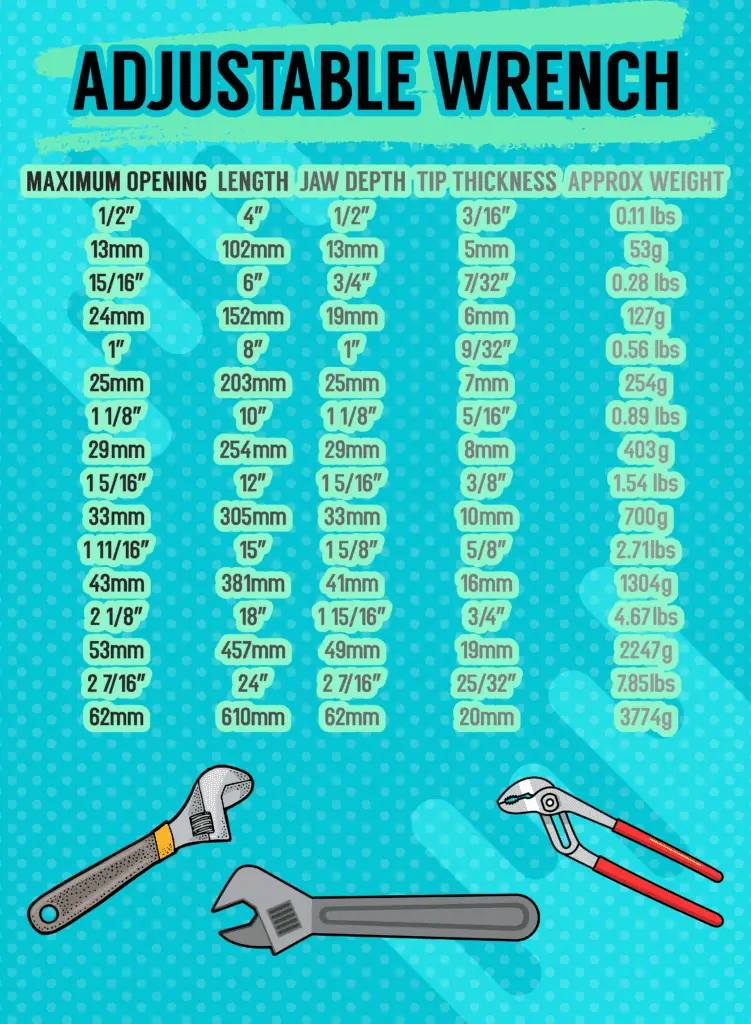
The adjustable wrench is a marvel of engineering yet is often underestimated. Available in various sizes, they are designed to accommodate numerous fastening applications. Sizes are quantified based on the jaw opening—the maximum distance between the fixed and adjustable jaw. The most prevalent sizes in domestic and professional settings include:
- 6-inch Adjustable Wrench: Compact and nimble, the 6-inch wrench is ideal for light-duty applications. It works splendidly for bicycle repairs and plumbing tasks that require precision in confined spaces. Its portability allows it to be a favorite among outdoor enthusiasts and DIYers alike.
- 8-inch Adjustable Wrench: Slightly larger, the 8-inch version offers an excellent balance between size and versatility. This size can accommodate an array of bolts and nuts in household tasks, from assembling furniture to minor automotive repairs. It is a must-have for those just beginning their tool collection.
- 10-inch Adjustable Wrench: The 10-inch wrench strikes a perfect chord between convenience and strength. Capable of gripping larger fittings and hardware, it is frequently employed in plumbing and HVAC tasks. Its robustness provides peace of mind when dealing with stubborn fasteners.
- 12-inch Adjustable Wrench: For those who find themselves wrestling with larger fittings, the 12-inch wrench is the go-to tool. Its formidable jaw opening accommodates substantial nuts and bolts, making it indispensable for heavy-duty applications. Industrial mechanics and experienced handymen often opt for this size for its sheer power.
The Science Behind Choosing the Right Size
Choosing the correct adjustable wrench size can significantly impact your efficiency and success in completing tasks. When employing an adjustable wrench, consider these crucial factors:
- Application: What are you working on? Different projects require varying levels of torque. While a 6-inch wrench might suffice for bicycle maintenance, it certainly won’t cut it for large plumbing fixtures.
- Space Constraints: The environment in which you’re working plays a pivotal role in your choice. Tight spaces demand compact tools, while wider areas allow for more flexibility in size.
- Comfort and Control: Ergonomics matter too. A wrench that feels too bulky can lead to fatigue, while a too-small wrench may lack the necessary torque to complete the job effectively. Find what fits your hand comfortably.
Benefits of Owning Multiple Sizes
While it’s tempting to stick with one-size-fits-all, owning a range of adjustable wrenches can be advantageous. Each size serves a purpose, and having options at your fingertips enhances problem-solving capabilities. This multi-faceted approach allows you to adapt to various tasks, ensuring you’re prepared for any repair or assembly that comes your way.
Furthermore, using the appropriate size can help avert tool damage and minimize wear and tear on fasteners. Using an oversized wrench can strip the heads of nuts or bolts, leading to costly repairs. On the contrary, an undersized wrench may not provide enough grip, risking slippage and potential personal injury. Striving for that optimal fit promotes safety and efficiency.
Best Practices for Adjustable Wrench Usage
To maximize the utility of your adjustable wrenches, adhere to these best practices:
- Adjust the Jaw Properly: Ensure the moving jaw is adjusted precisely to the fitting you are grasping. A loose grip can lead to slippage, whereas an excessively tight grip may damage the fastener.
- Use the Wrench Correctly: Apply force on the movable jaw when loosening or tightening. Holding it incorrectly can lead to misalignment and potential accidents.
- Maintain Your Tools: Regular upkeep is necessary. Keep your adjustable wrenches clean and lubricated to ensure longevity. In doing so, you grant yourself the gift of reliable performance.
Conclusion
In conclusion, selecting the most common adjustable wrench size is not merely a trivial pursuit; it’s a necessary step in fortifying your preparation for any project. Between 6-inch and 12-inch wrenches, understanding their distinct advantages and applications can affect both practical outcomes and your overall toolbox sophistication. Now, do you accept the challenge? Evaluate your collection, consider what you might be missing, and gear up for your next DIY adventure with confidence!