In an age where social connectivity is incessantly touted, many individuals find themselves enveloped in an inexplicable sense of isolation. George Tooker’s iconic painting, “The Subway,” profoundly encapsulates this paradox, addressing the universal struggles of anxiety and the human condition. The uncanny depiction of a subway station teeming with despondent figures invites viewers to engage deeply with the intrinsic fears and anxieties that pervade modern existence. Through Tooker’s meticulous craftsmanship and imaginative vision, “The Subway” transports us into a liminal space where the human experience is laid bare, compelling us to reflect on our own lives.
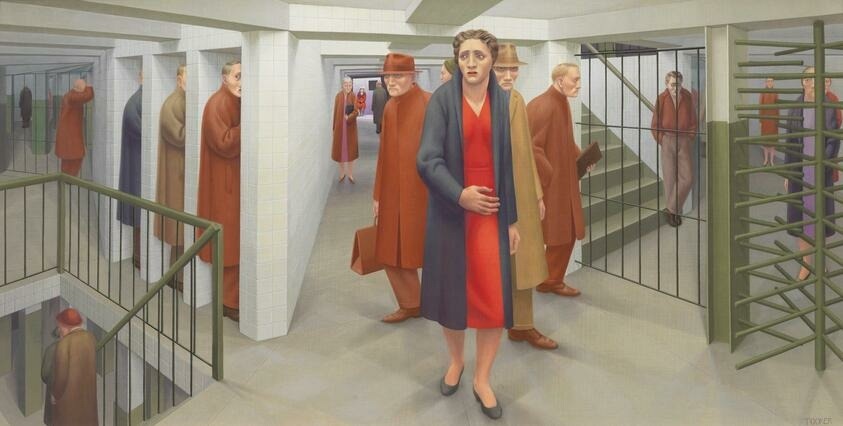
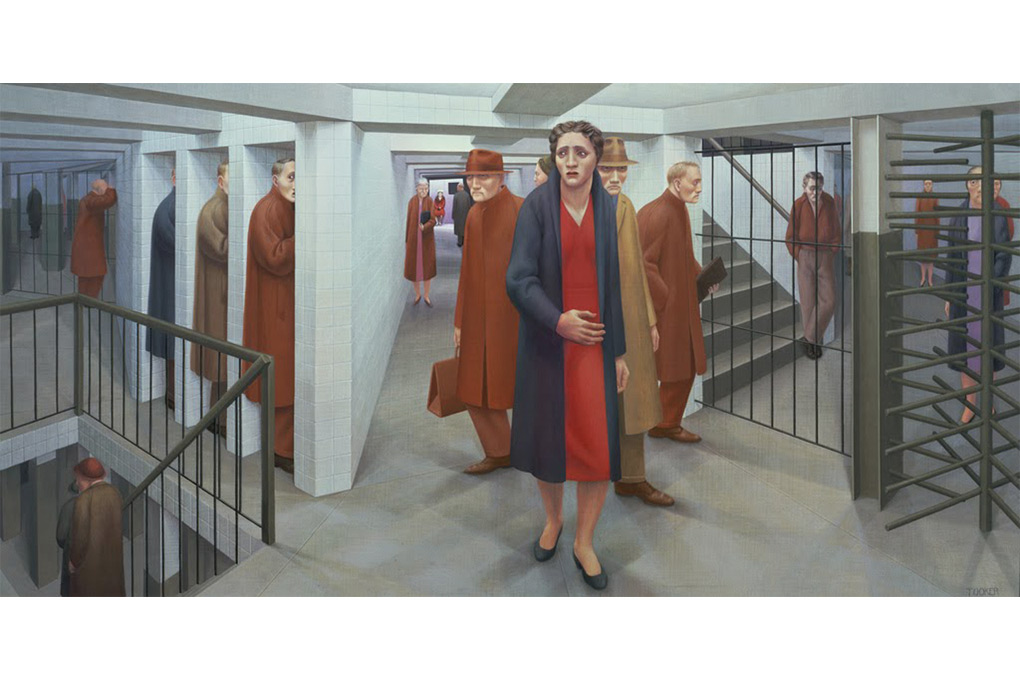
To comprehend the layers embedded in Tooker’s work, one must traverse the psychological landscape he meticulously crafts. Painted in 1950, during a post-war America grappling with existential doubt, “The Subway” serves as a critique of societal alienation. In it, we observe forlorn figures crammed together in a sterile and chaotic underground station. Each character is a poignant representation of urban dwellers besieged by the throes of anxiety, struggling to establish connections amidst the cacophony of life. Their elongated shadows and forlorn expressions evoke a profound melancholia, suggesting a shared experience of disconnection rather than physical proximity.
The subway, often regarded as a symbol of urban life, transforms into more than just a transit system in Tooker’s portrayal. It metamorphoses into a maze of internal conflict—a veritable crucible in which the complexities of the human psyche are laid bare. The stark environment is painted in muted hues, enhancing the figures’ sense of entrapment, suffocation, and despair. An atmosphere of desolation envelops the scene, creating a visceral understanding of anxiety that resonates deeply with viewers, making them confront their own instances of fear and uncertainty.
As one delves into “The Subway,” it becomes evident that Tooker meticulously employs a range of artistic techniques to encapsulate his themes. The use of perspective invites the viewer to peer into the dimly lit depths of the subway, creating a sense of voyeurism that challenges one’s comfort with alienation. Figures appear to be in dialogue with each other, yet their body language conveys a profound disconnect. This masterful juxtaposition spotlights the paradox of modern existence—individuals surrounded by throngs of people, yet feeling intensely alone.
Furthermore, Tooker’s unique rendering of the human form warrants scrutiny. The figures, characterized by ghostly features and exaggerated proportions, suggest more than mere individuals; they epitomize archetypes of anxiety. The unconventional representation breaks away from traditional depictions of humanity, forcing viewers to confront the raw essence of suffering and disquietude. It is this dissonance in portrayal that encourages a reflective dialogue about mental health and the ubiquitous nature of anxiety in contemporary society.
In the larger context of art as a conduit for societal reflection, “The Subway” serves as a poignant commentary on the human experience’s inherent anxieties. Tooker, through his astute insights, underscores the reality of contemporary life—where physical journeys often coincide with psychological odysseys. As individuals navigate the labyrinthine complexities of modernity, they are faced with existential dilemmas that evoke feelings of dread and uncertainty. In this regard, Tooker’s work resonates with anyone grappling with the anxieties of existence, compelling audiences to confront their inner turmoil.
The subtleties in “The Subway” extend beyond merely aesthetic considerations; they provoke a dialogue surrounding the emotional undercurrents permeating contemporary urban life. Anxiety often breeds a sense of urgency, compelling individuals to seek solace in social interactions while simultaneously feeling the weight of solitude. Thus, the painting acts as a reflective mirror, inviting viewers to discern the dichotomy between the public persona they project and the private struggles they conceal.
Articulating Tooker’s intent can be a daunting task, yet it is apparent that he sought to illuminate the struggles of a post-war society—the insidious fears that linger just beneath the surface of urban existence. In today’s context, where mental health has become a pivotal talking point, “The Subway” reverberates with its timeless commentary. The anxious figures encapsulated in this piece remind us of the importance of acknowledging our fears, fostering connection, and striving to cultivate empathy amongst those who may feel lost in a world rife with challenges.
In conclusion, “The Subway” is not merely a painting but a profound exploration of the essence of the human condition. George Tooker ingeniously captures the conundrums of anxiety and isolation, skillfully inviting viewers to engage with sentiments that are often left unspoken. This artwork stands as a testament to the struggles faced by many, transcending time and space to articulate a shared experience. For those who identify with Tooker’s message, “The Subway” offers both solace and reflection, serving as a reminder that even in the depths of despair, understanding and camaraderie are possible. Through this hauntingly beautiful work, viewers are left to ponder not only the anxieties that plague their own lives but also the broader emotional tapestry that binds humanity together in all its complexities.