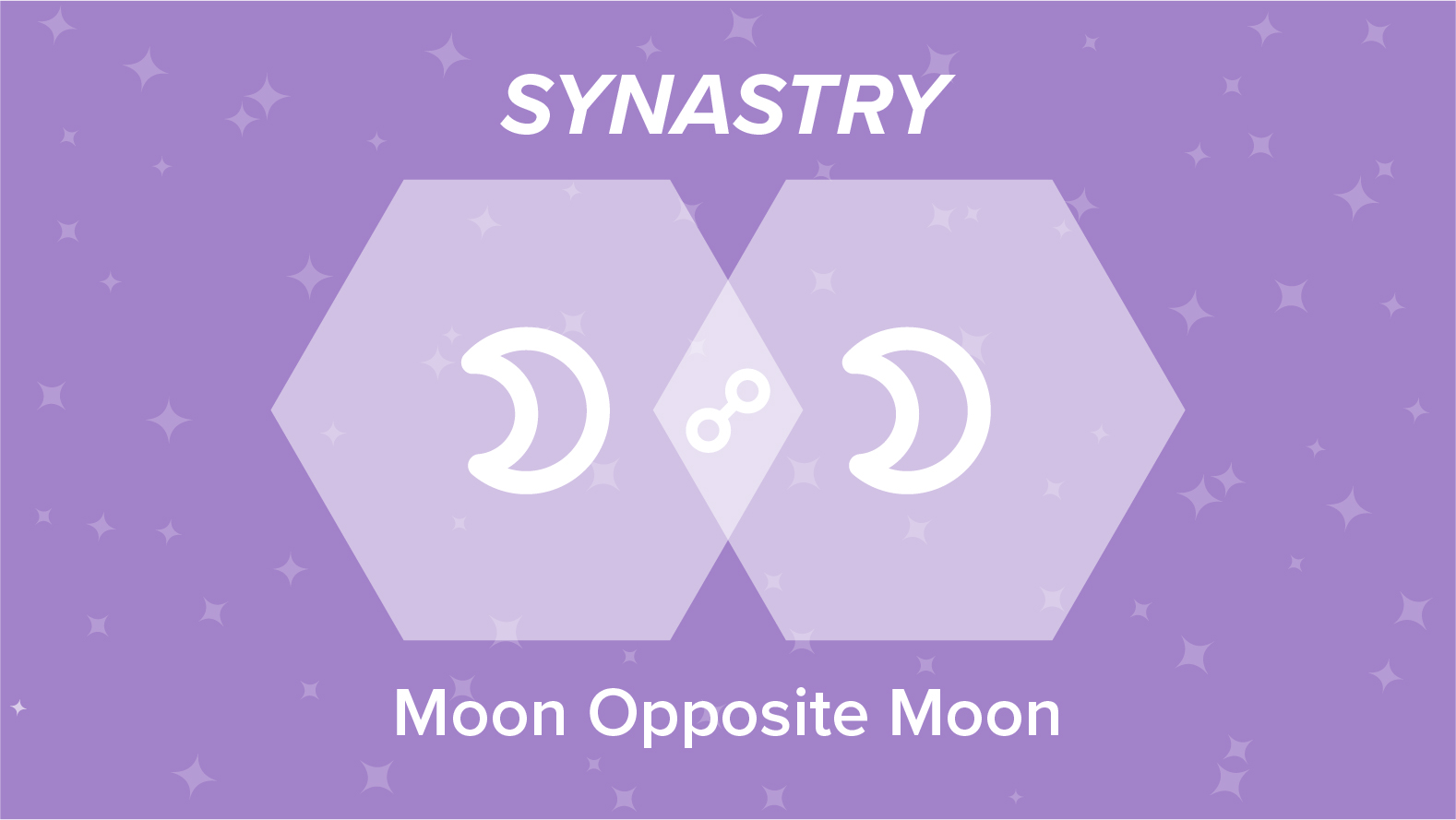
When navigating the intricate landscape of relationships, an astrological perspective can offer profound insights, particularly through the lens of synastry—the art of comparing two astrological charts to determine compatibility. Among the myriad of cosmic interactions, the phenomenon of Moon Opposite Moon synastry emerges as a captivating subject. This intriguing alignment suggests that despite emotional differences, there lies the potential for deep understanding and evolution. But what does this opposition truly signify? How do two individuals, with their moons in opposing signs, foster a connection that is as complex as it is transformative?
To delve deeper into this conundrum, we need to unravel the symbolism associated with the Moon in astrology. The Moon represents our innermost feelings, emotional responses, and subconscious patterns. It governs our instincts, nurturing styles, and how we react to life’s challenges. When two people have their moons in opposing signs, the emotional landscapes they navigate can appear vastly different, often leading to misunderstandings. However, it is crucial to recognize that oppositions in astrology are not inherently negative. Instead, they can indicate a dynamic interplay that, when embraced, often leads to growth and deeper emotional connections.
Understanding the essence of the Moon Opposite Moon aspect requires a closer look at the emotional energies at play. Opposing moons suggest a juxtaposition of feelings and reactions. For instance, if one person’s Moon resides in Aries—known for its fiery, assertive emotional expression—the opposite Moon in Libra, characterized by a diplomatic and gentle demeanor, may manifest a contrasting approach to conflict and intimacy. These dichotomies can either create friction or provide opportunities for learning. The key lies in recognizing these differences not as barriers but as avenues for emotional expansion.
The foundation of this emotional compatibility lies in the awareness that opposing moons can facilitate profound empathy. Partners become mirrors, reflecting each other’s emotional instincts. This mirroring can incite discomfort at times, as each individual confronts emotional responses that may feel alien or even unsettling. Nevertheless, it is through this tension that true understanding can emerge. For example, the Aries Moon might impulsively dive into confrontations, while the Libra Moon prefers calculated diplomacy; this could lead to a profound realization of how each party processes their feelings, ultimately expanding both perspectives.
Furthermore, the Moon Opposite Moon dynamic can act as a catalyst for personal growth. This contrast provides an opportunity to embrace traits that may not come naturally. Individuals might find themselves drawn to the opposing essence, thus challenging their own ingrained emotional habits. The Aries Moon, for example, may learn the value of patience from its Libra counterpart, while the Libra Moon may cultivate assertiveness and decisiveness. This continuous interplay can foster growth and resilience, steering the relationship towards deeper emotional fulfillment.
While the benefits of Moon Opposite Moon synastry are compelling, challenges are inevitable. Emotional volatility can surface, frequently arising from misinterpretations of intentions or feelings. The assertiveness of the Aries Moon may be perceived as aggression by the sensitive Libra Moon, resulting in feelings of hurt and confusion. Conversely, the Libra Moon’s inclination to deliberate and seek fairness might come across to the Aries Moon as indecisiveness. To nurture this connection, clear communication becomes paramount. Sharing feelings openly and discussing emotional needs transparently can mitigate misunderstandings and enhance the partnership.
Moreover, Moon Opposite Moon relationships can inspire profound emotional intelligence. Navigating the ebbs and flows of such dynamics requires partners to attune themselves to their own responses, which can lead to invaluable insights. Each partner, by addressing the emotional needs of the other, can explore their vulnerabilities and, in doing so, develop a richer understanding of their own psyche. This reciprocal emotional labor fosters a partnership steeped in respect and deep connection, despite the challenges.
In the realm of shared experiences, mutual interests can also greatly influence the emotional compatibility of a Moon Opposite Moon dynamic. While differing emotional styles may present a plethora of challenges, shared passions can act as a powerful glue that unites these opposing energies. Finding common ground—be it a love for travel, art, or hobbies—serves to deepen the connection. These shared experiences offer respite from emotional tension, allowing partners to revel in unity rather than division.
As with all astrological aspects, individual circumstances and the entirety of one’s natal charts shape the nature of these relationships. Factors such as Sun signs, rising signs, and other planetary aspects should also be taken into account when evaluating compatibility. However, the Moon’s position remains profoundly significant. It ultimately unveils our most tender selves and garners a potent influence over how we connect emotionally.
In conclusion, Moon Opposite Moon synastry embodies a paradox of emotional variance and compatibility, radiating both challenge and growth potential. It reveals that emotional differences, when navigated intentionally, can foster profound understanding and resilience in a relationship. Partners will invariably face hurdles; yet, embracing these disparities can catalyze emotional maturity and a unique bond. The rewarding journey of negotiation and reflection often leads to a deeper, more enriching connection, making Moon Opposite Moon one of the most enigmatic yet rewarding astrological pairings.