The landscape of audio technology has undergone a remarkable evolution, heralding new aspirations among audiophiles and sound engineers alike. As we forge ahead into an era of sophisticated sound reproduction, anticipation mounts regarding the fidelity and clarity of musical renditions. Amid this backdrop, total harmonic distortion (THD) emerges as a pivotal factor shaping the auditory experience, prompting a need for deeper comprehension and mitigation strategies. The quest to minimize THD not only safeguards the integrity of audio signals but also elevates the listener’s experience to unprecedented heights.
Total harmonic distortion quantifies the non-linearities and imperfections within an amplifier’s output signal when compared to its input. The representation of sound is inherently complex; when an amplifier generates a sound wave, it should ideally reproduce the original wave without alteration. However, various elements—such as component quality, circuit design, and operational parameters—can introduce unwanted harmonic frequencies, leading to distortion. Understanding the sources of these anomalies can be the first step toward minimizing their impact.
Harmonic distortion occurs primarily due to non-linear characteristics in the amplifier’s components, such as transistors, resistors, and capacitors. When subjected to varying inputs, these elements can produce additional harmonics—frequencies that are multiples of the original signal. The presence of these harmonics can muddle the purity of sound, causing listener fatigue and degradation of overall audio quality.
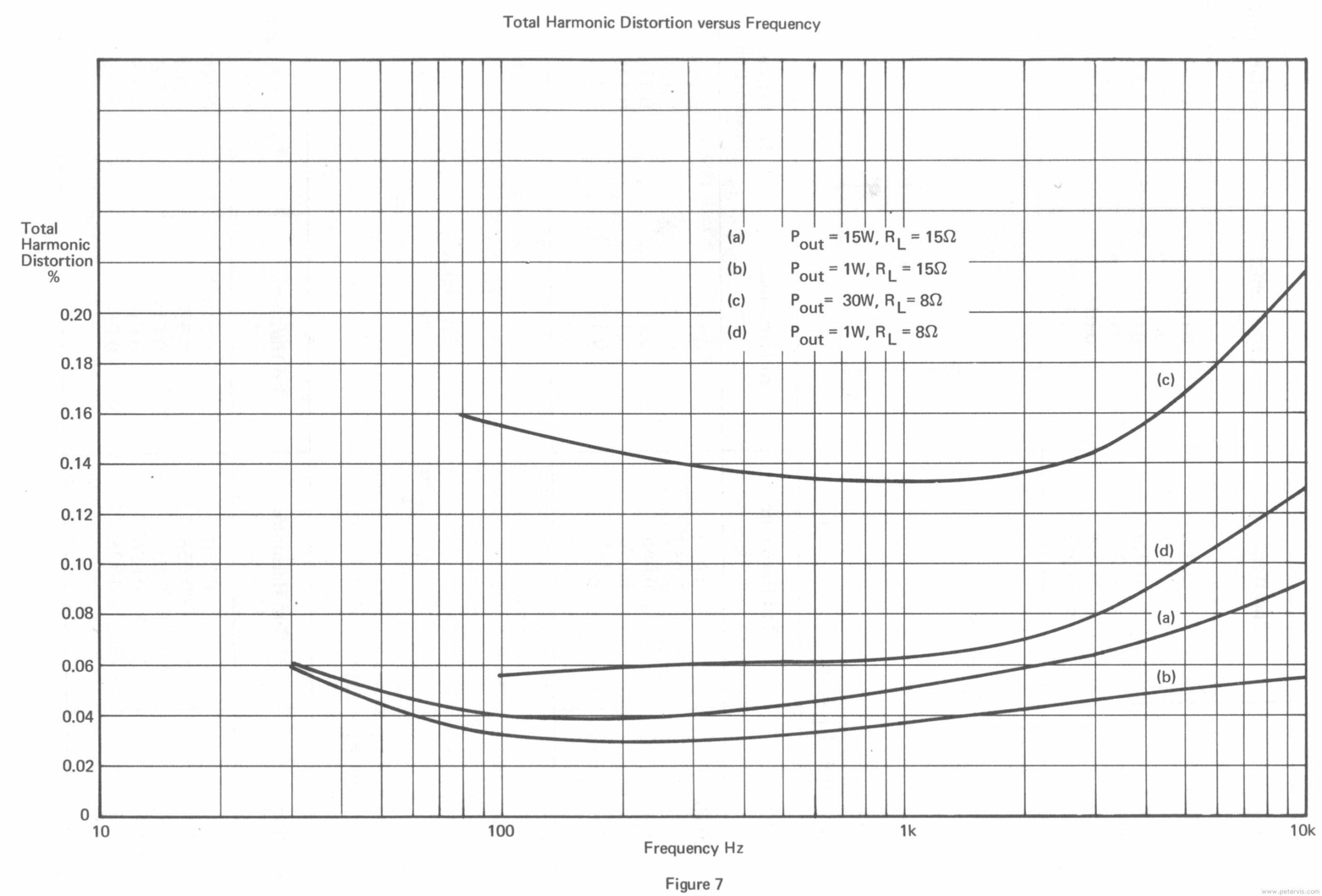
As a precursor to controlling THD, it is essential to evaluate its measurement. Total harmonic distortion is expressed as a percentage, representing the ratio of the total power of harmonic frequencies to the power of the fundamental frequency. A commonly accepted standard for high-fidelity audio is a THD of less than 1%. However, the goal should be to pursue a THD as low as possible, ideally in the range of 0.01% to 0.1% for premium audio equipment. This meticulous attention to detail directly correlates with enhanced clarity and dynamic range in audio reproduction.
One foundational approach to minimizing THD is the selection of high-grade components during amplifier design. Utilizing superior transistors, capacitors, and resistors can significantly mitigate distortion. For instance, Class A amplifiers, known for their linear characteristics, often achieve lower distortion levels, although they may come at the cost of efficiency and thermal management. In contrast, Class D amplifiers, while more efficient, are notorious for higher distortion unless designed with precision and care.
Furthermore, the topology of the amplifier plays an instrumental role. Negative feedback systems, which involve feeding a portion of the output signal back into the input, can dramatically decrease THD. By adjusting the gain and stabilizing the voltage levels, negative feedback works to flatten the amplifier’s response curve, taming distortion and generating a more faithful reproduction of the input signal. Implementing this design technique enables engineers to tailor the audio output to sharper specifications, fostering a more immersive auditory experience.
Another significant contributor to THD is the operating conditions of the amplifier. Environmental factors such as temperature fluctuations and power supply integrity can induce variations that lead to distortion. Ensuring a stable power supply devoid of interference can mitigate these risks. Moreover, the strategic placement of the amplifier, accounting for adequate airflow and temperature moderation, will promote performance stability. This diligence in environmental management can translate into more consistent sound reproduction over time.
Moreover, understanding the role of load impedance is crucial. Amplifiers have optimal loading conditions, and operating outside these parameters can skew performance. Utilizing appropriate speaker matching is indispensable; mismatched impedance can evoke higher levels of THD. Employing high-quality speaker cables that minimize electrical resistance and loss will further bolster the synergy between amplifier and speaker, ensuring a harmonious operation.
In addition to hardware considerations, software configurations can significantly influence total harmonic distortion. Digital signal processing (DSP) introduces advanced algorithms that can actively monitor and correct harmonic imbalances. By employing sophisticated FIR (Finite Impulse Response) filters and equalization strategies, it is possible to preemptively address distortive audio artifacts before they propagate through the system. These innovations showcase the transformative capabilities of modern audio technology, combining traditional engineering with contemporary advancements.
Ultimately, the mitigation of total harmonic distortion in amplifiers resides at the intersection of science and artistry. Each decision—from component selection to architectural frameworks—plays a pivotal role in sculpting the audio landscape. As we navigate the future, characterized by exponential technological growth, the importance of THD will remain critically pertinent to both professional sound engineers and enthusiasts alike. The pursuit of excellence will foster innovation, empowering audio systems to transcend limitations and embrace the very essence of sound.
In conclusion, the future of total harmonic distortion management holds immense promise, where understanding and craftsmanship amalgamate to yield richer, clearer, and more vibrant sound. As exploration into optimal distortion minimization continues, so too will the auditory tapestry weaves itself into an increasingly intricate and enchanting experience.