Imagine a world where some creatures reside for centuries, witnessing the ebb and flow of life across generations. What if you were to guess which among the animal kingdom holds the esteemed title for longevity? Take a moment and ponder this playful challenge: is it a mammoth tortoise, a resilient jellyfish, or perhaps a wise old whale? Each contender exhibits fascinating traits that afford them impressive lifespans. Join us as we embark on a quest to uncover the astonishing animals that have mastered the art of living long and thriving against the odds.
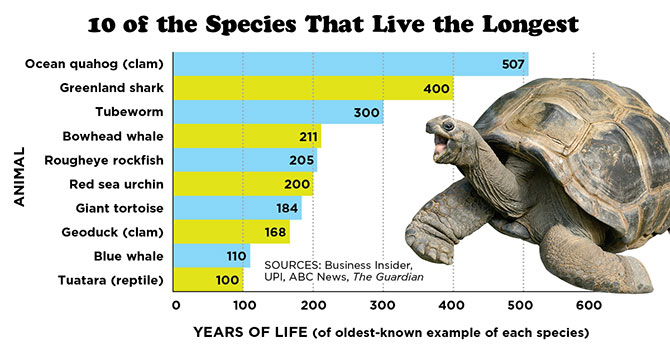
When it comes to longevity in the animal kingdom, few titles reign supreme like that of the Greenland shark (Somniosus microcephalus). Harvard biologists have estimated that some individuals may live for over four centuries, making them the true avatars of survival in frigid Arctic waters. These enigmatic fish harbor an intriguing secret: they grow at a snail’s pace, about one centimeter per year! Their slow metabolism might be the key to their impressive lifespan, enabling them to traverse the depths of time while eluding the numerous predators that populate their world.
Another heavyweight champion of longevity is the bowhead whale (Balaena mysticetus). Renowned for its exceptional lifespan, this magnificent creature can live for over 200 years. Bowhead whales have a remarkable ability to survive in extreme conditions, with thick blubber that insulates them from the chilling Arctic temperatures. Interestingly, these whales possess a unique adaptation: their bones harbor amino acids that mitigate the effects of aging, allowing them to navigate the transient waters with unparalleled grace and resilience.
As we descend into the realm of the invertebrate world, the immortal jellyfish (Turritopsis dohrnii) makes a formidable entrance. Zipping through the waters, this extraordinary jellyfish possesses a biological mastery that enables it to revert back to its juvenile state when faced with environmental stressors. While it’s technically not immortal in the traditional sense, its ability to evade death through cellular regeneration illustrates nature’s ingenuity. This process allows the jellyfish to escape predation and harsh conditions, albeit not without the risk of being consumed before it works its wonders.
The quahog clam (Arctica islandica), meanwhile, takes on a different approach to longevity. This bivalve creature has been documented to live for more than 500 years! Found in the icy depths of the North Atlantic, its secret lies in its sturdy shell and slow growth rate, which protects it from the tumultuous marine environment. Researchers have discovered specimens that carry rings in their shells similar to tree rings; these clues provide fascinating insights into their extensive life stories, revealing the history of our oceans within their hardened shells.
Transitioning from the watery depths, we revisit the terrestrial realms, where the African elephant (Loxodonta africana) roams majestically. Though the average lifespan of an elephant is around 60 years, some individuals have been known to live up to 70 years or beyond. The deep societal bonds they form within their herds and the vast landscapes they traverse contribute to their complex existence. As keystone species, elephants play a vital ecological role, further enhancing their invaluable contribution to the environment and extending their legacy in our ecosystems.
Ascending to the treetops, one encounters the macaw; while macaws typically live for around 50 years, some species and individuals can reach ages of up to 80 years in captivity. Their vibrant plumage and intelligence are mirrored by their impressive social structures, where they live harmoniously amidst the treetops. The parrot’s longevity showcases the effects of anthropogenic factors as well; captive-bred macaws often enjoy longer lives due to reduced stressors compared to their wild peers.
It wouldn’t be prudent to overlook the iconic tortoise, specifically the Galápagos tortoise (Chelonoidis nigra). Tales of these ancient reptiles reveal lifespans exceeding 100 years, with some individuals reportedly living for over 150 years. The tortoise’s unique adaptations, such as an expansive shell to protect from predators, allow it to inhabit various ecosystems while leading a slow-paced life marked by a delightful simplicity. Their presence on the Galápagos Islands correlates closely with the conservation efforts undertaken to protect these living relics of history.
In summary, the animal kingdom is rich with extraordinary creatures that showcase nature’s resilience. From the Greenland shark to the quahog clam, the challenges of longevity illuminate the intricate connections between biology and environmental adaptation. Each encounter with these remarkable survivors encourages awe and respect for the diversity of life on our planet. So the next time you ponder the question of who lives the longest, remember the myriad adaptations and stories encompassing these true titans of longevity. They are more than mere statistics; they embody the mysteries and wonders of the natural world, inviting us to explore and appreciate their incredible journeys through time.