In the realm of the animal kingdom, speed is often tantamount to survival. While many may immediately conjure images of a cheetah dashing across the African savannah, an exploration of the world’s speedsters reveals a kaleidoscope of astonishing capabilities among various species. This article endeavors to present a nuanced perspective on the fastest runners in the wild, steering away from conventional wisdom towards an appreciation of the impressive adaptability inherent in each animal’s unique evolutionary journey.
When contemplating speed in the animal world, several factors warrant consideration: the terrain, hunting strategies, and anatomical adaptations significantly influence the velocities that different species can achieve. With this multifaceted understanding, it becomes evident that determining the “fastest” animal is not a mere matter of raw speed alone, but a harmonious blend of various intrinsic characteristics that optimize performance in specific environments.
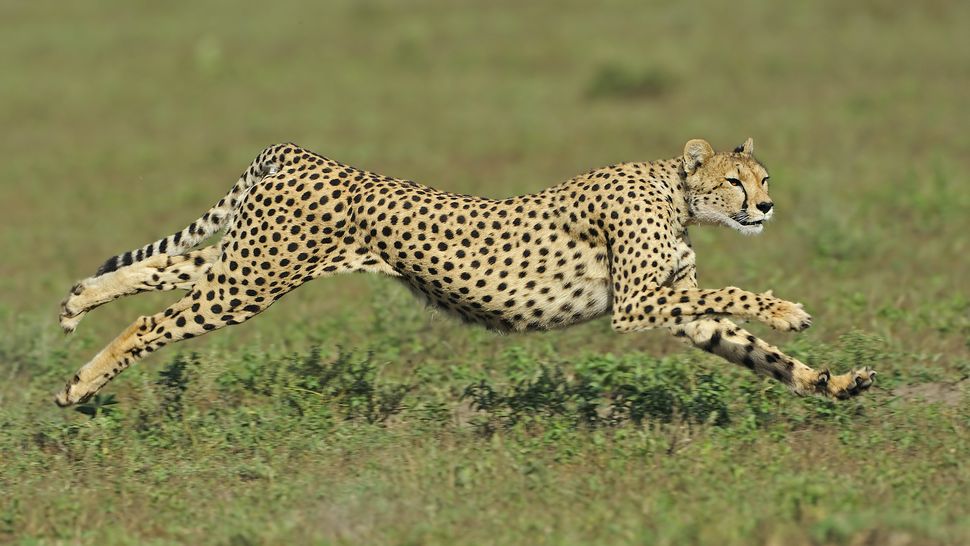
At the pinnacle of speed on land is the legendary cheetah (Acinonyx jubatus), renowned for its breathtaking bursts of velocity that can reach an astonishing 58 to 64 miles per hour (93 to 104 km/h). This feline racehorse exhibits remarkable adaptations such as elongated limbs, a flexible spine, and specialized respiratory mechanisms, all of which converge to facilitate explosive acceleration. Cheetahs are capable of reaching top speeds in mere moments, a necessity when hunting agile prey like gazelles. However, their sprinting prowess is ephemeral; they can maintain such speeds only for short distances—typically around 1,500 feet (460 meters)—before succumbing to exhaustion.
Yet, it’s pivotal to note that cheetahs thrive in open grasslands, where their speed allows them to catch prey that is equally adept at evasion. In other scenarios, different species exemplify extraordinary speed suited to their environments. For instance, the pronghorn antelope (Antilocapra americana), native to North America, may not be as swift as the cheetah in a sprint, but it exhibits remarkable endurance, capable of maintaining speeds around 55 miles per hour (89 km/h) for much longer distances, a feat impressive in its own right. Pronghorns can run at high speeds for several miles, aided by their enhanced lung capacity and efficient energy utilization. Their evolutionary adaptations were honed to evade now-extinct North American predators, showcasing the dynamic relationships between prey and predator.
In the avian world, the peregrine falcon (Falco peregrinus) reigns supreme when speed is measured during its characteristic hunting stoop, a high-speed dive used to catch prey. While soaring through the skies, this raptor can reach breathtaking velocities of over 240 miles per hour (386 km/h). However, the falcon’s speed is not a direct comparison to the running capabilities of land animals. Instead, it highlights the unique adaptations in birds of prey, where aerial dynamics play a critical role, showcasing expertise in the art of dive bombing rather than terrestrial locomotion.
Moreover, the remarkable world of insects presents another fascinating perspective on speed. The Brazilian free-tailed bat (Tadarida brasiliensis), for instance, exemplifies great agility in the air, capable of achieving horizontal flight speeds of over 99 miles per hour (160 km/h). The mechanics of their flight, combined with finely tuned neuromuscular systems, allow these nighttime hunters to navigate with precision at high velocities, feeding on insects in mid-air. This presents an alternate viewpoint on what constitutes “speed,” stretching the definition beyond merely terrestrial considerations.
As we delve deeper into the concept of speed, it becomes clear that varied adaptations in different environments yield an intriguing dichotomy. For example, the ostrich (Struthio camelus) stands as the fastest bird on land, capable of reaching speeds up to 40 miles per hour (64 km/h). Its strong legs and powerful stride allow it to escape predators in the African savannah. An interesting aspect of the ostrich’s speed lies in its ability to sustain it over considerable distances, making it not just a sprinter but also an endurance runner in its own right. This reorients our understanding of speed, allowing us to appreciate the multifactorial nature of running across species.
Additionally, we should not overlook the adaptations found in the remarkable springbok (Antidorcas marsupialis), a small African antelope renowned for its astonishing agility. This species employs unique locomotion techniques, including the “stotting” behavior, wherein it leaps high into the air, showcasing vigor while disorienting predators. The springbok can reach peak speeds of 55 miles per hour (89 km/h) while executing these acrobatic displays, further emphasizing the intricate interplay of speed, agility, and survival.
In summary, while the cheetah may predominantly occupy the spotlight as the fastest terrestrial animal, a wider exploration reveals a rich tapestry of adaptations geared toward speed across various species. From the majestic pronghorn’s endurance to the astonishing aerial dynamics of the peregrine falcon, speed manifests in a kaleidoscope of forms. Understanding these nuances encourages a deeper appreciation of the interconnected web of life and how different animals exemplify speed’s multifaceted nature in the relentless pursuit of survival amid evolving challenges. Thus, the title of “fastest” is not simply about raw numbers but encapsulates a story of adaptation, environment, and evolution across the animal kingdom.